Running Google Ads on a small budget is about structure, not spend. A small budget is not a disadvantage in Google Ads — sloppy structure is. I have seen ₹30,000-a-month accounts outperform ₹3-lakh accounts because the small one was disciplined and the big one was spraying money at everything Google suggested.
When every rupee has to count, structure is the whole game. Google’s own Google Ads Help docs explain the mechanics, but not the restraint a small budget demands. This guide is that restraint, turned into steps.
The goal is simple: predictable leads at a cost you can afford, from an account you actually understand. Here is how I build one.
Google Ads on a small budget starts from the money, not the keywords
Before you touch the platform, write down two numbers: what a customer is worth to you, and the most you can pay to acquire one and still profit. That target cost per acquisition (CPA) governs every decision that follows.
Work backwards from revenue. If a new client is worth ₹20,000 in lifetime profit and one in five leads closes, then a lead is worth ₹4,000 to you. If your landing page converts one in ten clicks into a lead, you can afford up to ₹400 per click and still break even.
Now you have a ceiling. Without it, you are optimising blind — chasing clicks instead of customers, and cheering for traffic that never pays a bill.
- Customer value: average profit per closed sale, not revenue.
- Close rate: leads that become paying customers.
- Target CPA: the most you will pay for a lead and still profit.
- Daily budget reality: at your CPA, how many leads can this budget realistically buy per month?
If the math says your budget buys three leads a month, plan for three. A small budget forces honesty about scale, and honesty is what keeps it profitable.
One theme per campaign, tightly grouped
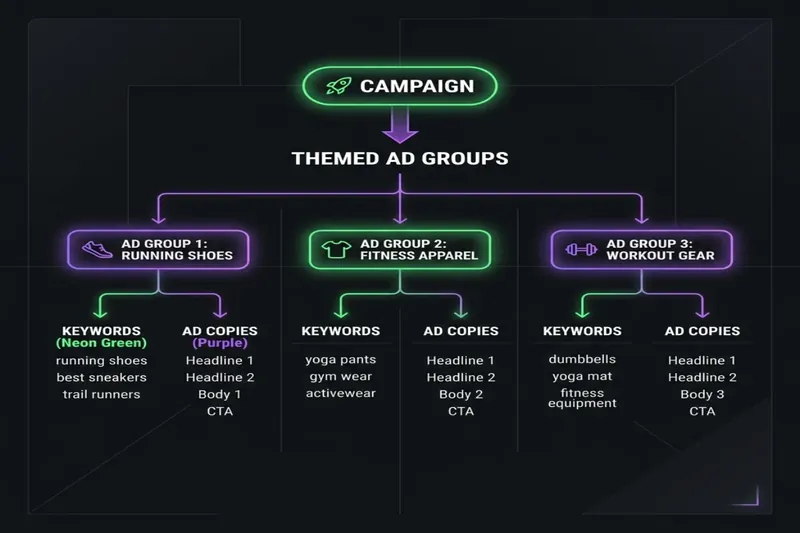
On a small budget, resist the urge to launch ten campaigns. Start with one or two Search campaigns built around your highest-intent themes. Concentration beats coverage when funds are thin.
One theme per campaign, one intent per ad group, and only keywords that a single ad can honestly answer. Tight groups mean relevant ads, higher Quality Scores, and cheaper clicks.
If you sell “emergency plumbing” and “bathroom renovation,” those are two ad groups with two different ads and two different landing pages — never one bucket of mixed keywords. A plumber searching at 11pm for a burst pipe wants a phone number, not a renovation gallery.
Keep each ad group to a handful of closely related keywords. When the search, the keyword, the ad headline, and the landing page all say the same thing, Google rewards you with lower costs. That is Quality Score doing your budget a favour.
Match types: start narrow, expand on data
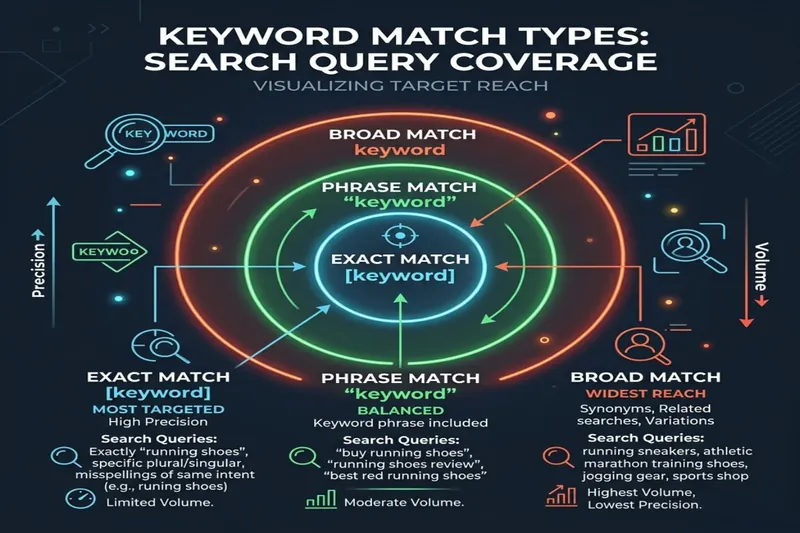
Broad match burns small budgets fast because it chases loosely related searches. Begin with phrase and exact match on your proven, high-intent terms. Discipline here is the difference between profit and a drained account by day ten.
- Exact: your non-negotiable money keywords. Tight control, highest intent.
- Phrase: captures natural variations without opening the floodgates.
- Broad: only later, only with conversion tracking and a firm target CPA guiding the bidding.
Once conversions are flowing and Smart Bidding has data to learn from, you can test broad match in a controlled, separate campaign with its own budget cap. Not before. On a small account, broad match without a target CPA is a leak with the tap left open.
Negatives are your budget’s best friend
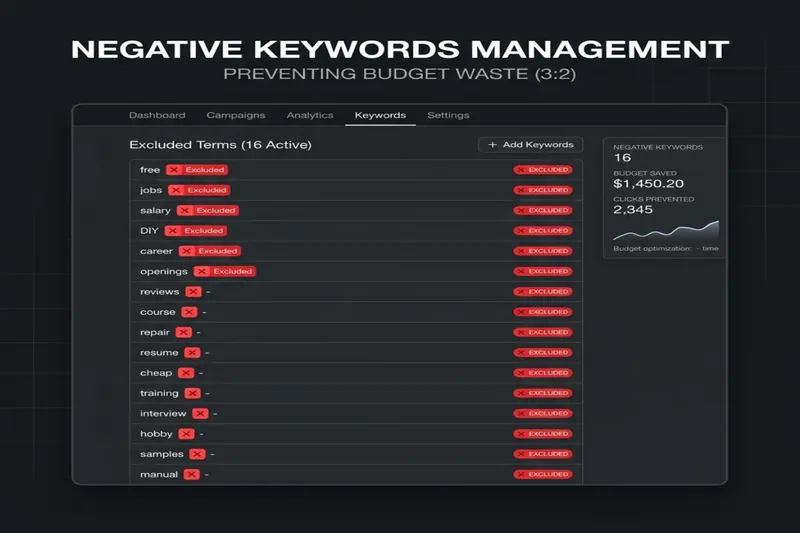
The fastest way to waste a small budget is paying for irrelevant clicks. Build a negative keyword list on day one, then review the search terms report every few days.
Common starters for a service business: “free,” “jobs,” “salary,” “DIY,” “course,” “cheap,” “how to,” and the names of anything you do not sell. Each of these attracts people who will never pay you.
Every wasted search you exclude is budget redirected to searches that convert. On lean accounts I treat the search terms report as a weekly ritual, not a quarterly chore. Fifteen minutes a week here saves more money than any bid tweak.
Bidding: let the machine learn, but feed it correctly
Smart Bidding works — but only if your conversion tracking is clean and you have enough conversions for it to learn. The order you switch strategies matters more than the strategy itself.
- Maximise Clicks with a max-CPC cap — gather signal cheaply when you have almost no data.
- Maximise Conversions — once conversions start arriving consistently.
- Target CPA — once you have roughly 15–30 conversions a month for the algorithm to learn from.
Switching to an aggressive automated strategy too early, on thin data, is the most common way small accounts blow up. The machine needs examples of what a good customer looks like. Give it fifteen before you ask it to find the next hundred.
Conversion tracking is not optional
If you cannot see which clicks become customers, you are not running Google Ads — you are donating to Google. Set up proper conversion tracking before you spend a rupee.
- Form submissions tracked as a conversion, not a pageview.
- Phone calls of a meaningful length (30+ seconds) counted, so junk calls do not inflate your data.
- WhatsApp clicks where that is how leads actually reach you.
- Offline conversions imported from your CRM, so the algorithm optimises toward closed revenue, not just form fills.
That last point separates amateurs from operators. When Google knows which leads actually became clients, it stops chasing cheap-but-worthless conversions and starts finding buyers. On a small budget, that shift alone can double your return.
The landing page does half the work
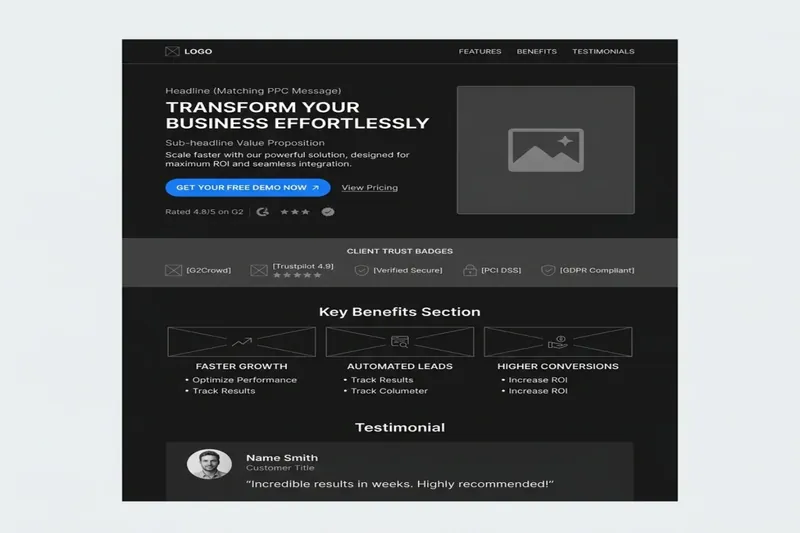
A great ad sending traffic to a slow, generic homepage wastes your money. Send each ad group to a page that matches its promise, loads fast, and has one obvious next step.
Message match lifts Quality Score, cuts your cost per click, and raises conversion rate at the same time — a rare triple win that matters most when budget is tight. If the ad says “24/7 emergency plumber in Rishikesh,” the page headline should say exactly that, with a call button above the fold.
- Speed: under 2.5 seconds to load, or you lose mobile clicks you paid for.
- One goal: a single, clear call to action — call, book, or fill this form.
- Proof: reviews, ratings, or a guarantee near the button to reduce hesitation.
- No distractions: strip navigation and competing offers that pull attention away.
A starter blueprint for Google Ads on a small budget
Here is the exact skeleton I launch small accounts with. It is deliberately boring, because boring compounds.
- Campaign 1 — Core service (Search): 2–3 tight ad groups, exact + phrase match, Maximise Clicks to start, Target CPA once data allows.
- Campaign 2 — Brand (Search): cheap, defends your name, captures warm demand competitors would otherwise steal.
- Shared negative list applied across everything, reviewed weekly.
- Conversion tracking wired to real leads before launch — no exceptions.
- One dedicated landing page per ad group, message-matched and fast.
Notice what is missing: no Display, no Performance Max, no Discovery on day one. Those channels can work, but they dilute learning and hide waste when your budget is small. Master intent-based Search first, then expand from a position of knowledge.
Common mistakes that quietly drain small accounts
Most small budgets do not fail from bad luck. They fail from a handful of avoidable habits I see again and again.
- Accepting every Google recommendation: the “optimisation score” often nudges you toward broad match and higher budgets. Read each suggestion critically.
- Running Search Partners and Display Expansion on: both spend your money in places you did not choose. Turn them off until you have a reason.
- Bidding on huge, generic terms: “shoes” or “insurance” will eat a small budget in hours. Go specific and local.
- Ignoring the schedule: if your business only answers calls 9–7, do not pay for 2am clicks.
- Editing every day: constant changes reset the learning phase and starve the algorithm of stable data.
Give it room, then scale what works
Do not judge a campaign after three days. Give the algorithm one to two weeks and a reasonable volume of conversions before you make big changes. Small budgets accumulate data slowly, so patience is a structural requirement, not a virtue.
Then do the boring, profitable thing: pause what loses money, pour budget into what wins, and repeat. Scale in steps of 15–20% at a time so you do not shock a working campaign back into learning.
That discipline — not a bigger budget — is what turns Google Ads from a cost into a channel. Once one campaign reliably returns more than it costs, adding budget is just turning a dial you already trust.
FAQ: Google Ads on a small budget
What is a realistic minimum budget for Google Ads?
There is no universal minimum, but you need enough to collect around 15–30 conversions a month for bidding to work. Work backwards from your cost per click and close rate. If a click costs ₹40 and you need ~20 leads, budget for that reality rather than a round number.
Should I use Performance Max on a small budget?
Usually not at the start. Performance Max spreads spend across many channels and hides where your money goes, which makes learning slow and waste hard to spot. Build results on intent-based Search first, then test Performance Max once you have solid conversion data to guide it.
How long before Google Ads on a small budget becomes profitable?
Expect two to four weeks to gather data, clean up search terms, and let bidding stabilise. Profitability depends on your margins and landing page, but disciplined small accounts often reach break-even within the first month and grow from there.
Can I run Google Ads myself or should I hire help?
You can absolutely start yourself with this blueprint. Bring in help when the account grows past your time budget, or when small mistakes cost more than the fee to avoid them. The point of a specialist is to make each rupee work harder, not to run up spend.
The takeaway
Winning at Google Ads on a small budget comes down to one idea: spend only where you can measure a return, and cut everything else. Know your numbers, build tight, track real conversions, and scale slowly.
Want it run for you? See how I approach profitable Google Ads management, or book a quick call and we will map your first campaign together.